


Areas of practice / Public liability
Public liability and slip and fall lawyers in Brisbane
Owners, occupiers, councils and businesses have a legal duty to keep the places they control reasonably safe for the people who use them. If you were injured because of a hazard that should have been fixed, cleaned up or warned about, you may have a claim, and it is their insurer who pays. Evidence disappears fast in these cases, so the first days matter more than in any other kind of claim.
- Supermarkets and shopping centres
- Restaurants, cafés and bars
- Rental properties and body corporates
- Footpaths, roads and car parks
- Parks, playgrounds and pools
- Schools and childcare
- Gyms, events and venues
- Theme parks, hotels and holidays
- Dog attacks
Who we act for in Brisbane and Queensland
We act for people injured in public places and on other people's property in Brisbane and throughout Queensland: slips, trips and falls in shopping centres, supermarkets, restaurants and car parks, falls on council footpaths, injuries in rental properties and body corporate common areas, dog attacks, and injuries at gyms, pools, schools and events. We can help at any stage, from the first notice of claim through to settlement. Our offices are in Eight Mile Plains and Brisbane City (by appointment), and we can meet at our office, at your home, or wherever you feel is most convenient, or by phone or video if you are elsewhere in Queensland. We act in English, Mandarin, Cantonese, Hakka or Malay.
Who can claim
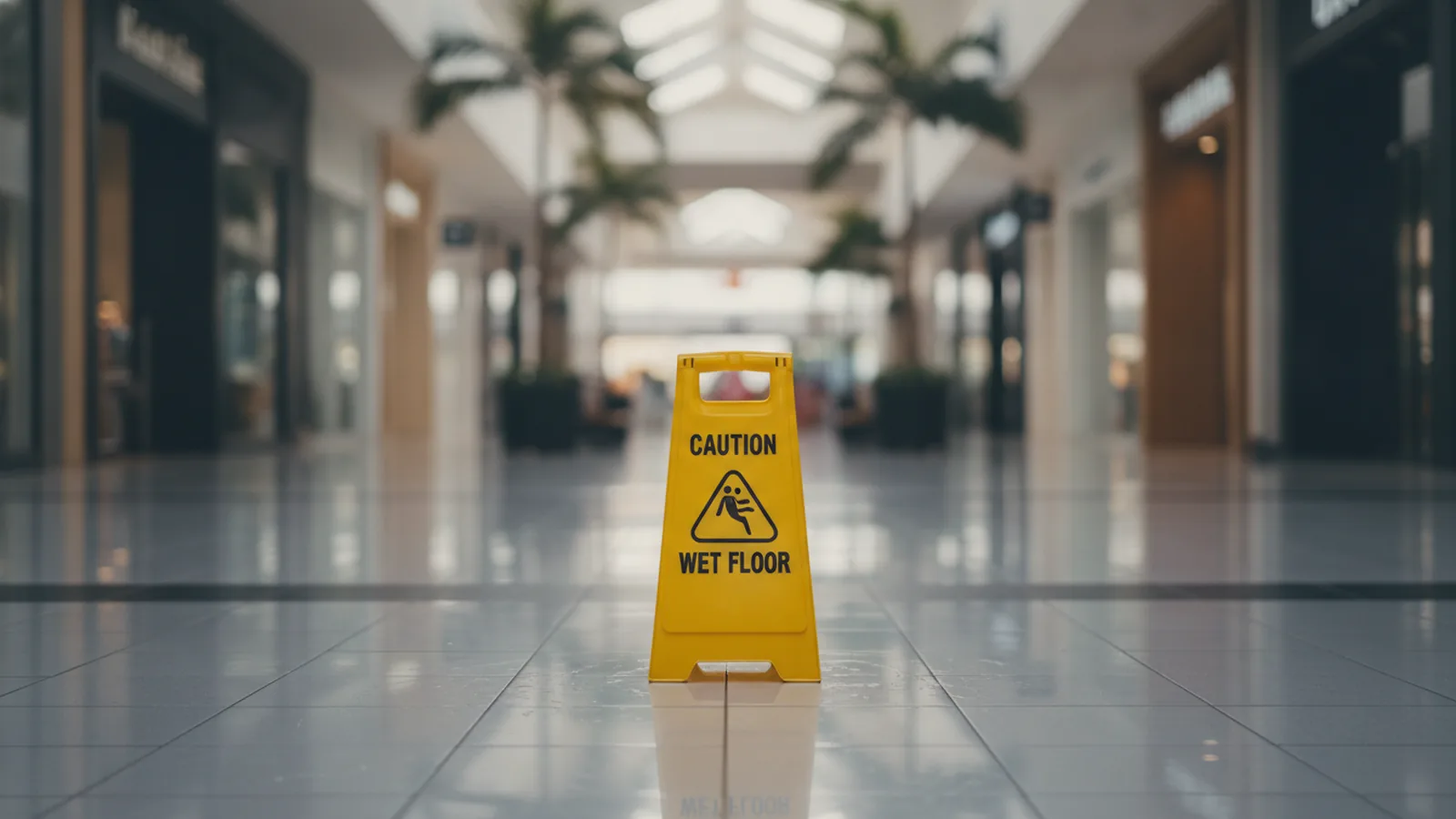
Anyone injured in Queensland because of a hazard that someone else was responsible for and did not deal with reasonably: a wet floor with no sign, a broken step, poor lighting, an uneven footpath, a loose handrail, an unfenced pool, a dog that was known to bite, an event that was not properly supervised. The responsible party might be a business, a landlord, a body corporate, a council, a school or an individual, and almost always the claim is paid by their insurer, not by them.
Slipping or tripping is not enough on its own. The question is whether the risk was one the occupier should have foreseen and could have removed or warned about at reasonable cost. Cleaning schedules, incident registers, maintenance records and CCTV usually answer that question, and they sit with the other side. Getting to them early is much of the work. If the injury happened at your own workplace, it is usually a workers' compensation matter instead, and we will tell you which.
What to do in the first 48 hours
If you can, in this order. Nothing on this list is too late to do today.
- Photograph the hazard and the surrounding area before it is cleaned, repaired or removed, with something in shot for scale. Note the date, time, lighting and weather.
- Report the incident to the manager, owner or council, ask for it to be recorded, and keep a copy or note the name of the person you told.
- Get the names and numbers of anyone who saw what happened or helped you afterwards.
- See a doctor, describe exactly how the injury occurred, and keep receipts for everything the injury costs you.
- Call us. CCTV in shopping centres and venues is often overwritten within weeks, and a letter from a lawyer preserves it.
The five stages of a public liability claim
Every claim follows the same path. Unlike a CTP or WorkCover claim, the insurer here does not fund your treatment along the way, which is one more reason to move quickly.
- Notice. We identify the responsible party and serve a Notice of Claim on them. Their insurer must respond within a month and say within six months whether it accepts liability.
- Treatment. You get better under your own cover and Medicare while the claim is prepared; the costs are recovered in the claim.
- Evidence. We obtain the cleaning logs, maintenance records, incident reports and footage, and specialists assess the permanent effect of the injury.
- Compulsory conference. Both sides meet with a full picture and exchange final offers. Most claims settle here or shortly after.
- Court, if it does not settle. Proceedings must be started within 60 days of the conference. Few claims get this far, but we prepare each one from the start as if it will.
Time limits: the dates that decide a claim
- 9 months
- from the incident, or from when symptoms first appeared, to give the responsible party your Notice of Claim
- 1 month
- from when you first instruct a lawyer to act on the claim and the responsible party is identified, if that comes sooner
- 3 years
- from the incident to start court proceedings
The nine-month and one-month periods run together and the earlier one applies. A late notice needs a reasonable excuse, and the three-year limitation period is close to absolute (for a child it runs from their 18th birthday). Where it is not yet clear who is responsible, the clock runs from when they are identified, and identifying them is something we do quickly.
What compensation can cover
Depending on your injuries and circumstances:
- Medical and treatment costs, past and future.
- Lost income and reduced capacity to earn, plus the superannuation on it.
- Care and assistance, including from family, above the legal threshold.
- Pain and suffering and loss of enjoyment of life, assessed under Queensland's injury scale.
- Travel, aids and equipment, and modifications where the injury requires them.
What the insurer will say, and what it is worth
Public liability insurers defend claims more often than CTP insurers do. The usual arguments are that the risk was obvious and you should have seen it; that the hazard had only just appeared and could not reasonably have been found; that you were distracted, hurrying, wearing the wrong footwear or had been drinking; or that the activity was a dangerous recreational one whose risks you accepted. Some of these reduce a claim rather than defeat it, and a shop telling you on the day that it was your fault decides nothing. We tell you at the first meeting which arguments apply, how strong they are, and whether the claim is worth running.
What you can hold us to
- A free first consultation, by phone, Zoom, at our office or wherever suits you. We tell you plainly whether you have a claim and what it is likely to involve.
- Your lawyer, from the first call to the last. The person who takes your call identifies the responsible party, preserves the evidence, serves the notice and sits beside you at the conference.
- No win, no fee. Our professional fees are only payable if the claim succeeds. We fund the outlays needed to run it, and in most cases they are not payable if the claim is unsuccessful; the exceptions are in the costs agreement, explained in writing before you sign anything.
- Answered within the hour, most of the time. Enquiries are answered on average within 30 minutes to an hour, including evenings and weekends, and always within one business day.
- English, Mandarin, Cantonese, Hakka or Malay, whichever you are most comfortable in.
The questions we get asked most
I fell in a shopping centre and the staff were very apologetic. Is that enough?
An apology is not an admission and does not decide a claim. What decides it is whether the hazard should have been found and dealt with sooner, which comes from cleaning logs and CCTV. Report the incident, take photos, and call us so the footage is preserved.
I didn't report it on the day. Can I still claim?
Yes, though it is harder, because the other side will say it never happened or happened differently. See a doctor now and tell them exactly how you were hurt, write down what happened while it is fresh, go back and photograph the hazard if it is still there, and call us.
Who actually pays?
The public liability insurer of the business, landlord, body corporate or council responsible. It is rare for an individual to pay personally. Where the responsible party turns out to be uninsured, we tell you early what that means for the claim.
I was injured at a friend's house or a rental property. Do I have to sue my friend?
The claim is made against the insurance held by the property's owner or the body corporate, and it is the insurer that responds and pays. Home and landlord policies commonly include public liability cover. We find out who is insured before any step is taken.
Does it matter that I had been drinking?
It can reduce compensation, and in some cases defeat a claim, but it does not automatically do either. Tell us the full story and we will assess it candidly.
I was bitten by a dog. Who is responsible?
In Queensland the person in control of the dog is generally liable for injury it causes, whether or not it had bitten before. Home insurance often responds. Photograph the injuries, report the attack to the council, and identify the owner if you can.
It happened on a council footpath. Can I claim against the council?
Yes, though councils have particular defences about what they knew and how they allocate maintenance, and the claim needs to be built with those in mind. Photographs of the defect with something for scale are especially valuable.
What does no win, no fee actually mean?
If the claim does not succeed, you pay no professional fees to us. We fund the disbursements needed to run the claim, such as medical reports, and in most cases they are not payable if it is unsuccessful. The exceptions are set out in the costs agreement, which you get in writing before you sign.
Legal insights
Guides on this topic
Plain-language explanations of the rules behind this kind of claim, with sources.
 Injured on a bus, train or at a station in Queensland: which claim applies
 Dog attack compensation in Queensland: who is liable and how to claim
 Gym and sport injuries in Queensland: does a waiver stop you claiming?
 Injured in a rental property in Queensland: can a tenant or visitor claim?
 Slip, trip and fall claims in Queensland: shopping centres, footpaths and other people's property
Your lawyer answers the phone.
Your first consultation is free, by phone, Zoom, at our office or at yours. We answer most enquiries within the hour and all of them within a business day, and we will tell you plainly whether you have a claim.