


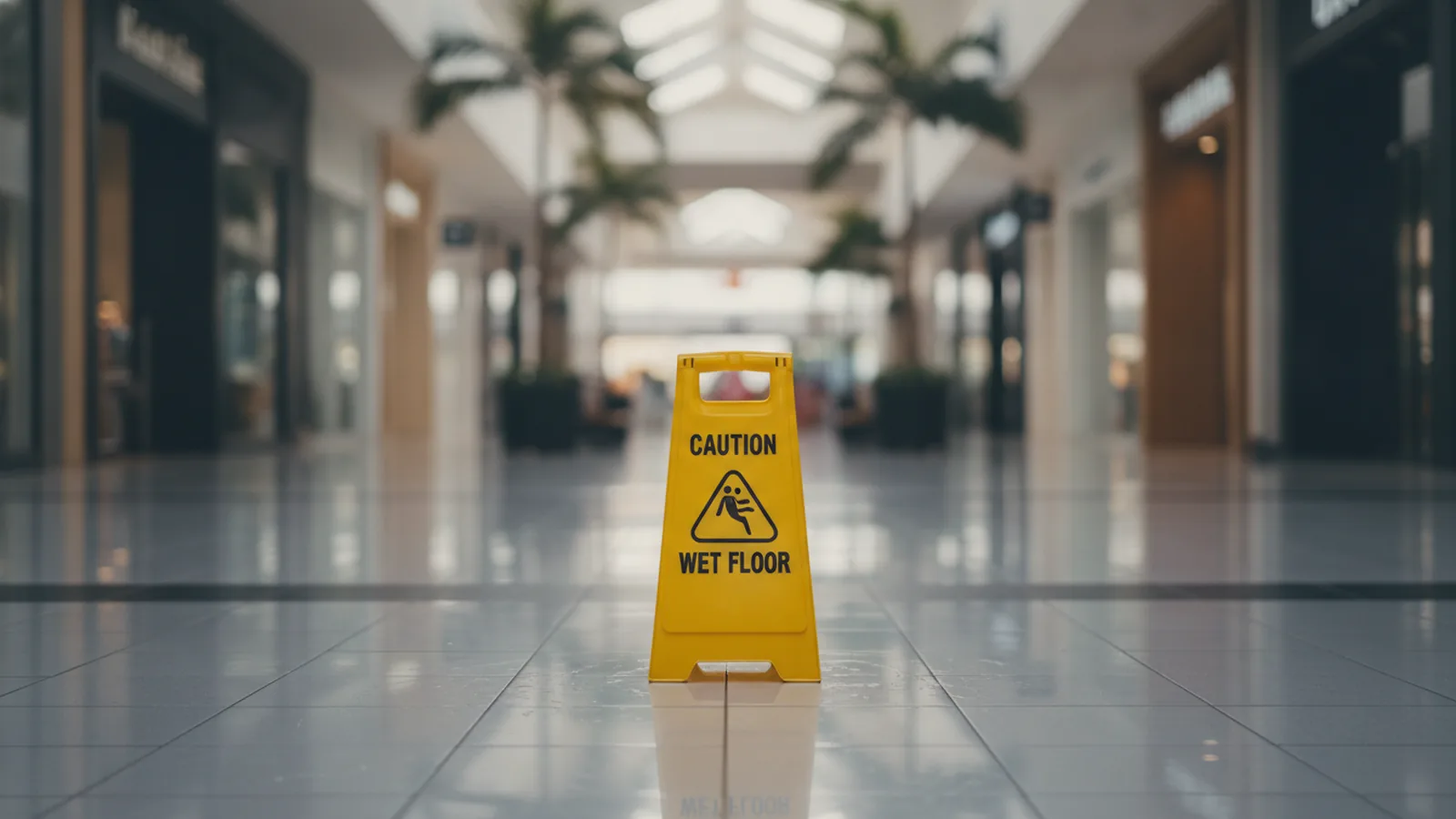
Public liability claims are the ones people are least sure they have. Everyone knows a car crash or a workplace injury can be claimed. Falling in a supermarket, tripping on a broken footpath, or being hurt at a rental property feels like bad luck. Sometimes it is. Often it is a hazard that the person responsible for the place should have found and fixed, and Queensland law gives you a claim against their insurer when it is.
Key points
- You must show the occupier owed you a duty of care, breached it by failing to take reasonable precautions against a foreseeable risk, and that the breach caused your injury.
- Notice of Claim must be served within nine months of the incident, or one month after first instructing a lawyer once the responsible party is identified; court proceedings within three years.
- Evidence disappears fastest in these claims: photograph the hazard, report it, and have CCTV preserved within weeks.
What has to be proved
The Civil Liability Act sets the test. The occupier of premises, a shopping centre, a supermarket, a landlord, a body corporate, a council, a venue, owes a duty to take reasonable care for the safety of people lawfully there. A claim succeeds if the risk of harm was foreseeable and not insignificant, a reasonable person in the occupier's position would have taken precautions against it, and they did not. The court weighs the probability and seriousness of harm against the burden of avoiding it: a wet floor in a supermarket aisle at lunchtime is a cheap risk to manage; an unavoidable uneven surface in a national park may not be.
The Act also gives the occupier defences. There is no duty to warn of an obvious risk, and a person is presumed to have been aware of one. Where the injured person was intoxicated and it contributed, compensation is reduced by at least 25 per cent. Where they were doing a dangerous recreational activity, injury from an obvious risk of it is not recoverable at all.
Who pays
Almost always the occupier's public liability insurer. Businesses and landlords carry it; home insurance usually includes it, which is why a fall at a friend's house is a claim against their policy, not against them; councils are insured for their footpaths and parks. The claim is served on the person or business responsible, and their insurer takes it over.
The process and its deadlines
Public liability claims run under the Personal Injuries Proceedings Act. A Notice of Claim must be served on the respondent within nine months of the incident (or the first symptoms), or within one month of first instructing a lawyer to act on the claim once the respondent is identified, whichever is earlier. The respondent must acknowledge within a month and respond on liability within six months. There is no interim funding of treatment in these claims, unlike CTP and WorkCover; treatment runs through Medicare and your own cover and is recovered at the end. Then disclosure, a compulsory conference, mandatory final offers, and court within 60 days of the conference if it does not settle, all within three years of the incident, so get advice from public liability lawyers in Brisbane early.
The evidence
These claims are won and lost in the first fortnight. Photograph the hazard before it is cleaned or fixed, with something for scale. Report it to the manager, owner or council and ask for it to be recorded. Get witnesses' names. See a doctor the same day and describe how it happened. Then ask for the footage: shopping centres, venues and car parks keep CCTV for weeks, not months, and a written request preserves it. Later, the occupier's cleaning logs, incident register and maintenance records are obtained through disclosure, and they usually decide whether the hazard should have been found sooner.
Council footpaths and public land
Councils owe the same duty, but the Civil Liability Act gives public authorities particular protections about how they allocate limited resources, and a council is not liable for a defect it did not know about and could not reasonably have found. Photographs of the defect with a ruler or a shoe for scale, and any evidence of prior complaints, are what make these claims.
Frequently asked questions
Can I claim if I fell in a shopping centre in Queensland? Yes, if the fall was caused by a hazard the centre or its cleaners should have dealt with, such as a spill left unattended or an unmarked wet floor. Report it, photograph it, and ask for the CCTV to be preserved.
What is the time limit for a public liability claim in Queensland? Notice of Claim within nine months of the incident or one month after first instructing a lawyer, whichever is earlier, and court proceedings within three years.
Who pays if I am injured at a friend's house? Their home and contents insurer, which usually includes public liability cover. You are not claiming against your friend personally.
Sources
- Civil Liability Act 2003 (Qld), ss 9 (general principles of duty), 13–15 (obvious risk), 19 (dangerous recreational activity), 35–36 (public authorities), 47 (intoxication) — legislation.qld.gov.au
- Personal Injuries Proceedings Act 2002 (Qld), ss 9 (notice of claim), 10 (respondent's response), 20 (liability response), 36–42 (compulsory conference, final offers, 60 days) — legislation.qld.gov.au
- Limitation of Actions Act 1974 (Qld), s 11 — legislation.qld.gov.au
- Queensland Law Handbook, Accident and injury: time limits for bringing actions — queenslandlawhandbook.org.au