


Areas of practice / Workers' compensation
WorkCover and workers' compensation lawyers in Brisbane
WorkCover pays for treatment, income and rehabilitation whoever was at fault. What most people do not know is that a second, separate claim for damages exists when the employer was negligent, that it is usually worth far more, and that the first claim can quietly close the door on the second. We run both, from the first form to the final settlement, and knowing where you stand early is the whole game.
- Back, neck and shoulder injuries
- Lifting, slips and falls at work
- Machinery, construction and industrial accidents
- Repetitive strain and overuse
- Psychological injuries, stress and bullying
- Occupational disease and hearing loss
- Journey claims
- Labour hire, casual and contract workers
Who we act for in Brisbane and Queensland
We act for injured workers in Brisbane and throughout Queensland: employees, casuals, apprentices, labour hire workers, and contractors who count as workers under the Act, in any industry. It makes no difference whether your employer is insured by WorkCover Queensland or is a self-insurer. We can help at any stage, from the WorkCover application, through a review of a rejected claim and the impairment assessment, to a common law damages claim. Our offices are in Eight Mile Plains and Brisbane City (by appointment), and we can meet at our office, at your home, or wherever you feel is most convenient, or by phone or video if you are elsewhere in Queensland. We act in English, Mandarin, Cantonese, Hakka or Malay.
Who can claim
Any worker injured in Queensland in the course of their work: employees, casuals, labour hire workers, apprentices and many contractors, depending on how the work was actually arranged rather than what the contract calls you. Injuries on the ordinary journey between home and work, and during breaks, are covered too. The injury can be sudden, like a fall or a machinery accident, or gradual, like a back worn down by years of lifting, hearing loss, or a psychological injury that built up over months.
The statutory claim and the damages claim
The statutory claim is the one everyone knows. You lodge an application with WorkCover Queensland (or your employer's self-insurer), which must decide it within 20 business days. If it is accepted you receive weekly payments while you cannot work, your medical and rehabilitation costs are paid, and, once your injury has stabilised, you are assessed for permanent impairment and may be offered a lump sum. Nobody has to be at fault.
The damages claim is usually the larger of the two. It is a claim against your employer's insurer for the full loss the injury has caused you, including future income, and it is available where the employer, or someone the employer is responsible for, was negligent: an unsafe system of work, a hazard that was known and not fixed, inadequate training or supervision, a co-worker's carelessness. Damages claims are usually worth far more than statutory benefits. Whether you have one, and how to run both without the first undermining the second, is what we tell you at the first meeting.
The five stages of a damages claim
Every claim follows the same path once the statutory claim has run its course.
- Notice. We serve a Notice of Claim for Damages on WorkCover, setting out how the employer was negligent, and it must respond on liability within six months.
- Rehabilitation. Treatment continues under the statutory claim while the damages claim is prepared. Getting better comes first.
- Evidence. Specialists assess the permanent effect of the injury; we gather the employer's safety records, training records and incident reports, and evidence of what the injury has cost you.
- Compulsory conference. Both sides meet with a full picture and exchange final offers. Most claims settle here or shortly after.
- Court, if it does not settle. Proceedings must be started within 60 days of the conference. Few claims get this far, but we prepare each one from the start as if it will.
Time limits: the dates that decide a claim
- 6 months
- from the injury, or from when you first saw a doctor about it, to lodge the WorkCover application
- 3 months
- to ask the Workers' Compensation Regulator to review a WorkCover decision you disagree with
- 3 years
- from the injury to start a damages claim in court
The six-month period is enforced, though WorkCover can accept a late application where there is a reasonable cause, such as a delayed diagnosis. The three-year limitation on damages claims is the one that catches people out: the statutory claim can run for a year or more, and by the time the lump sum offer arrives the window for a damages claim can be closing. We check the dates at the first meeting and put the notice in early where the limitation is near.
The lump sum offer and the choice it forces
When your injury has stabilised, WorkCover arranges an assessment of your degree of permanent impairment (DPI) and issues a Notice of Assessment, usually with an offer of a lump sum. If you disagree with the percentage you have 20 business days to ask for a fresh assessment, which can go to the independent Medical Assessment Tribunal.
Then comes the choice. If your DPI is less than 20 per cent, you must elect: accept the lump sum, or reject it and pursue a damages claim instead. You cannot have both. The lump sum is often a small fraction of what a damages claim would be worth, and the notice gives you a limited time to decide. Do not accept, and do not let the time run, without advice. If your DPI is 20 per cent or more you can accept the lump sum and still claim damages.
Psychological injuries
Anxiety, depression, PTSD and adjustment disorders arising from work are compensable in Queensland where work was a significant contributing factor. The usual causes are bullying, harassment, excessive workload, traumatic events and assaults. The scheme excludes injuries that arise from reasonable management action taken in a reasonable way, such as a fair performance process, and insurers rely on that exclusion heavily. These claims turn on evidence: contemporaneous complaints, emails, medical records and witnesses. Keep everything, see your doctor early, and call us before you respond to the insurer's questions.
Injuries on the way to work, and on a break
A journey claim covers injuries on the ordinary route between home and work, and between workplaces, under the statutory layer, as do injuries during a meal or rest break. If the journey injury was caused by another driver, you may also have a CTP claim against that driver's insurer, which can be worth considerably more. We run the two together so that nothing is missed and the deadlines for each are met.
If WorkCover rejects your claim or stops your payments
A rejection, a decision to cease benefits, or a dispute about the degree of impairment can all be challenged. The first step is a review by the Workers' Compensation Regulator within three months of the decision; the next is an appeal to the Queensland Industrial Relations Commission. Time limits are strict at each stage. A rejection is not necessarily the end of the claim: there are options available, and the medical evidence matters at every step, particularly for psychological and gradual-onset injuries.
Your job while you claim
Your employer cannot dismiss you because of the injury within twelve months of it, and must take reasonable steps to bring you back to suitable work. Making a claim is your legal right, it is an offence to discourage you from doing so, and it is the insurer that pays, not your employer. Many of our clients keep working for the same employer through and after a claim.
What it costs
The first consultation is free. We act on a no win, no fee basis: our professional fees are only payable if the claim succeeds. Under section 347 of the Legal Profession Act 2007 (Qld), in a speculative personal injury claim our professional fees cannot be more than half of what you receive after refunds and outlays are deducted.
We fund the outlays needed to run the claim, such as specialist medical reports, and in most cases they are not payable if the claim is unsuccessful. There are situations where they become payable; they are set out in the costs agreement, which we explain in writing before you sign anything.
What you can hold us to
- A free first consultation, by phone, Zoom, at our office or wherever suits you. We tell you which claims apply to you, what each is likely to be worth, and the order to run them in, and we help with the WorkCover application itself, not only what comes after.
- Your lawyer, from the first call to the last. The person who takes your call handles the review, the impairment assessment, the election and the damages claim through to the conference.
- No win, no fee. Our professional fees are only payable if the claim succeeds. We fund the outlays needed to run it, and in most cases they are not payable if the claim is unsuccessful; the exceptions are in the costs agreement, explained in writing before you sign anything.
- Answered within the hour, most of the time. Enquiries are answered on average within 30 minutes to an hour, including evenings and weekends, and always within one business day.
- English, Mandarin, Cantonese, Hakka or Malay, whichever you are most comfortable in.
The questions we get asked most
Do I have to prove my employer was at fault?
Not for the statutory WorkCover claim, which is no-fault. Fault matters for the damages claim, and that is where the larger compensation is. We tell you at the first meeting whether the facts support one.
I'm a casual, a labour hire worker or a contractor. Am I covered?
Casual and labour hire workers are covered. Many contractors are too, depending on how the work is actually arranged rather than what the contract calls you. We can tell you quickly.
I signed the lump sum offer. Is it too late for a damages claim?
If your impairment was under 20 per cent, accepting the lump sum usually ends the right to claim damages. If you are still within the time to decide, or your impairment was 20 per cent or more, options may remain. Call us before anything else is signed.
My injury developed gradually. Can I still claim?
Yes. Repetitive strain, back injuries from years of lifting, hearing loss and occupational diseases are all compensable. The time limit generally runs from when a doctor first assessed the injury, so see one now if you have not.
How long will it take?
A statutory claim starts paying within weeks of acceptance. A damages claim usually resolves within one to two years of the injury stabilising, because it should not settle before the lasting effect of the injury is known.
What does no win, no fee actually mean?
If the claim does not succeed, you pay no professional fees to us. We fund the disbursements needed to run the claim, such as medical reports, and in most cases they are not payable if it is unsuccessful. The exceptions are set out in the costs agreement, which you get in writing before you sign.
Will my employer find out I have seen a lawyer?
Not from us. Once a damages claim is started the insurer and employer are notified, and we will discuss the timing with you. Your employer cannot lawfully treat you worse for claiming.
Legal insights
Guides on this topic
Plain-language explanations of the rules behind this kind of claim, with sources.
 Proposed WorkCover changes for psychological injury in Queensland: what the 2026 Bill says
 Industrial deafness and noise-induced hearing loss: WorkCover claims in Queensland
 WorkCover permanent impairment lump sums in Queensland: how the DPI and the statutory formula work
 How to lodge a WorkCover claim in Queensland: the application, the work capacity certificate and what happens next
 Will a WorkCover claim hurt my employer? What actually happens when a worker lodges
 Back injury at work in Queensland: WorkCover, degeneration and damages
 Workplace bullying compensation in Queensland: WorkCover, stop-bullying orders and damages
 Injured on a construction site in Queensland: WorkCover, principal contractors and labour hire
 How long does a WorkCover claim take in Queensland?
 Your job after a WorkCover claim: what your employer can and cannot do
 Paid on an ABN, through labour hire, or as a 'contractor': are you covered by WorkCover?
 Hurt on the way to or from work: journey claims, and the CTP claim beside them
 Psychological injury at work: what the scheme covers, and the exclusion insurers rely on
 WorkCover rejected your claim, or stopped your payments. The review path, and its deadlines.
 The Notice of Assessment has arrived with a lump sum offer. Read this before you sign.
 WorkCover weekly payments: how much, for how long, and when they step down
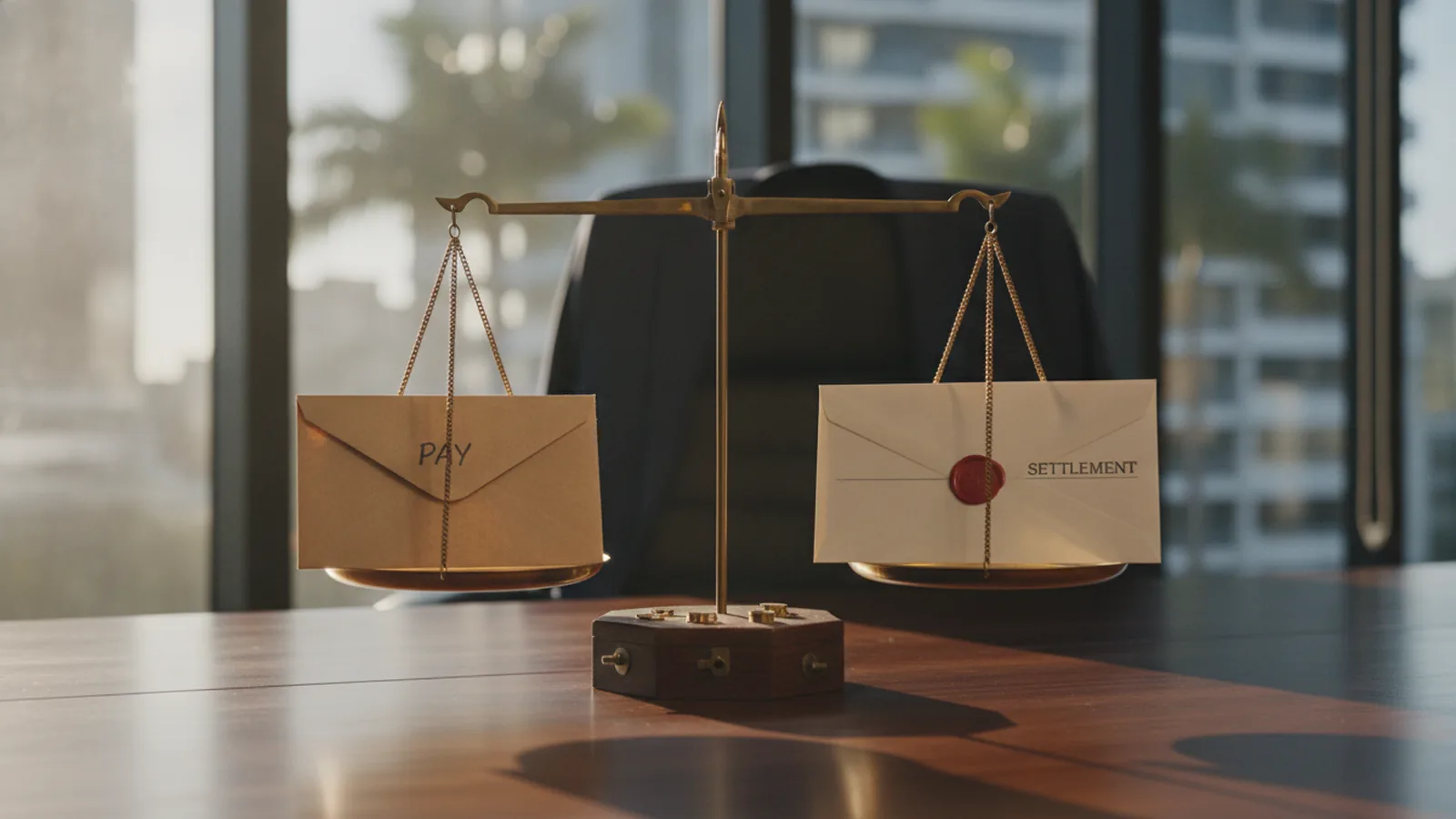 Two claims, not one: the statutory WorkCover claim and the damages claim explained
 Injured at work in Queensland: the first week, step by step
Your lawyer answers the phone.
Your first consultation is free, by phone, Zoom, at our office or at yours. We answer most enquiries within the hour and all of them within a business day, and we will tell you plainly whether you have a claim.