


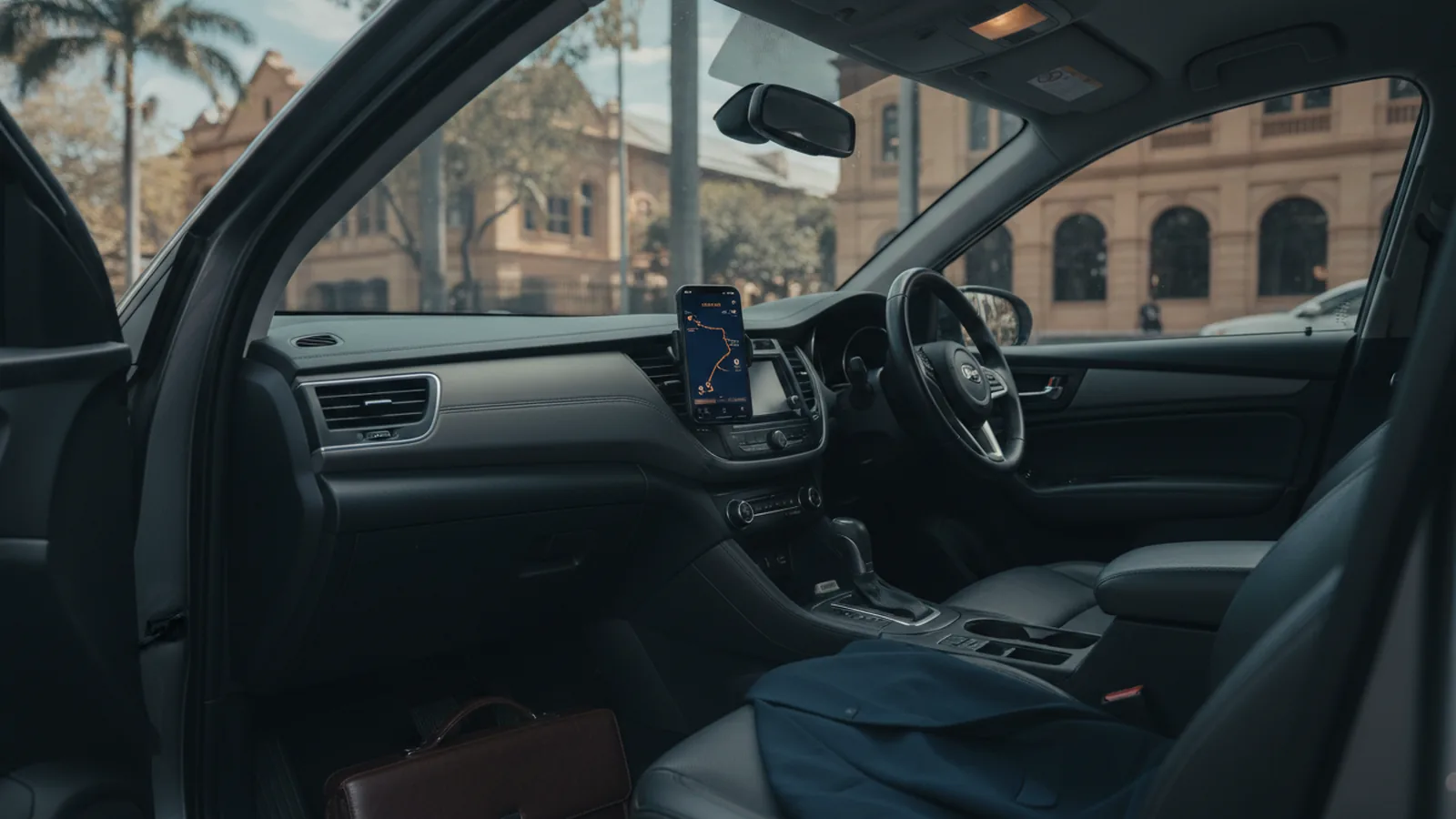
Rideshare cars are registered Queensland vehicles, and Queensland requires vehicles used for booked hire to be insured in the correct CTP class. For an injured passenger or other road user, the claim is therefore made under the same CTP scheme as any other motor accident. The person whose position is more complicated is the driver, who is generally an independent contractor rather than an employee.
Key points
- A rideshare passenger injured by any driver's negligence claims against that driver's CTP insurer, which may be the rideshare car's insurer or another vehicle's.
- Other road users hit by a rideshare vehicle claim against its CTP insurer in the ordinary way.
- Rideshare drivers are usually not "workers" for WorkCover purposes, so their own injuries are covered by CTP only where another driver was at fault, and otherwise by their own insurance.
Passengers
A passenger is almost never at fault, so a passenger's claim is a question of which driver was. If the rideshare driver caused the accident, the claim is against the CTP insurer of the rideshare car. If another vehicle caused it, the claim is against that vehicle's insurer. Where fault is shared, notices can go to both and the insurers sort out contribution between themselves. Passengers should record the trip details from the app, the driver's name and registration, and any witnesses, and see a doctor the same day.
Other road users
A pedestrian, cyclist, motorcyclist or car occupant injured by a rideshare driver's negligence claims against the rideshare vehicle's CTP insurer. If the vehicle was not insured in the right class, the CTP policy still responds to the injured third party; the classification issue is between the insurer and the owner.
Drivers
Queensland's workers' compensation scheme covers "workers" as defined in the Act, which broadly means employees and certain contractors who would be employees for PAYG purposes. Rideshare drivers working through an app under a services agreement have generally been treated as independent contractors, so WorkCover ordinarily does not cover them. A rideshare driver injured by another driver's negligence has a CTP claim against that driver's insurer. A driver injured in a single-vehicle accident, or one that was their own fault, has no CTP claim and is left with their own income protection, TPD cover through superannuation, and any accident cover the platform provides. Drivers should check what cover the platform actually offers and what their super fund includes.
Time limits and process
Notice of Accident Claim within nine months, or one month after first consulting a lawyer, whichever is earlier. Three years to start proceedings. The rest of the process is the same as any CTP claim: insurer's liability response, rehabilitation funding on request, medical evidence, compulsory conference and settlement or court.
Frequently asked questions
Does Uber's insurance cover me as a passenger? Your claim in Queensland is under the vehicle's CTP insurance, which is compulsory. Any additional cover a platform offers is separate and does not replace the CTP claim.
Can a rideshare driver claim WorkCover? Usually not, because drivers are generally contractors rather than workers under the Act. Each case depends on the arrangement, so get advice.
I was hit by a rideshare car while cycling. Who do I claim against? The CTP insurer of the rideshare vehicle, identified by its registration.
Sources
- Motor Accident Insurance Act 1994 (Qld), ss 5, 37 — legislation.qld.gov.au
- Motor Accident Insurance Commission, CTP insurance for booked hire vehicles — maic.qld.gov.au
- Workers' Compensation and Rehabilitation Act 2003 (Qld), s 11 and Schedule 2 (who is a worker) — legislation.qld.gov.au
- Queensland Government, Booked hire services — qld.gov.au