


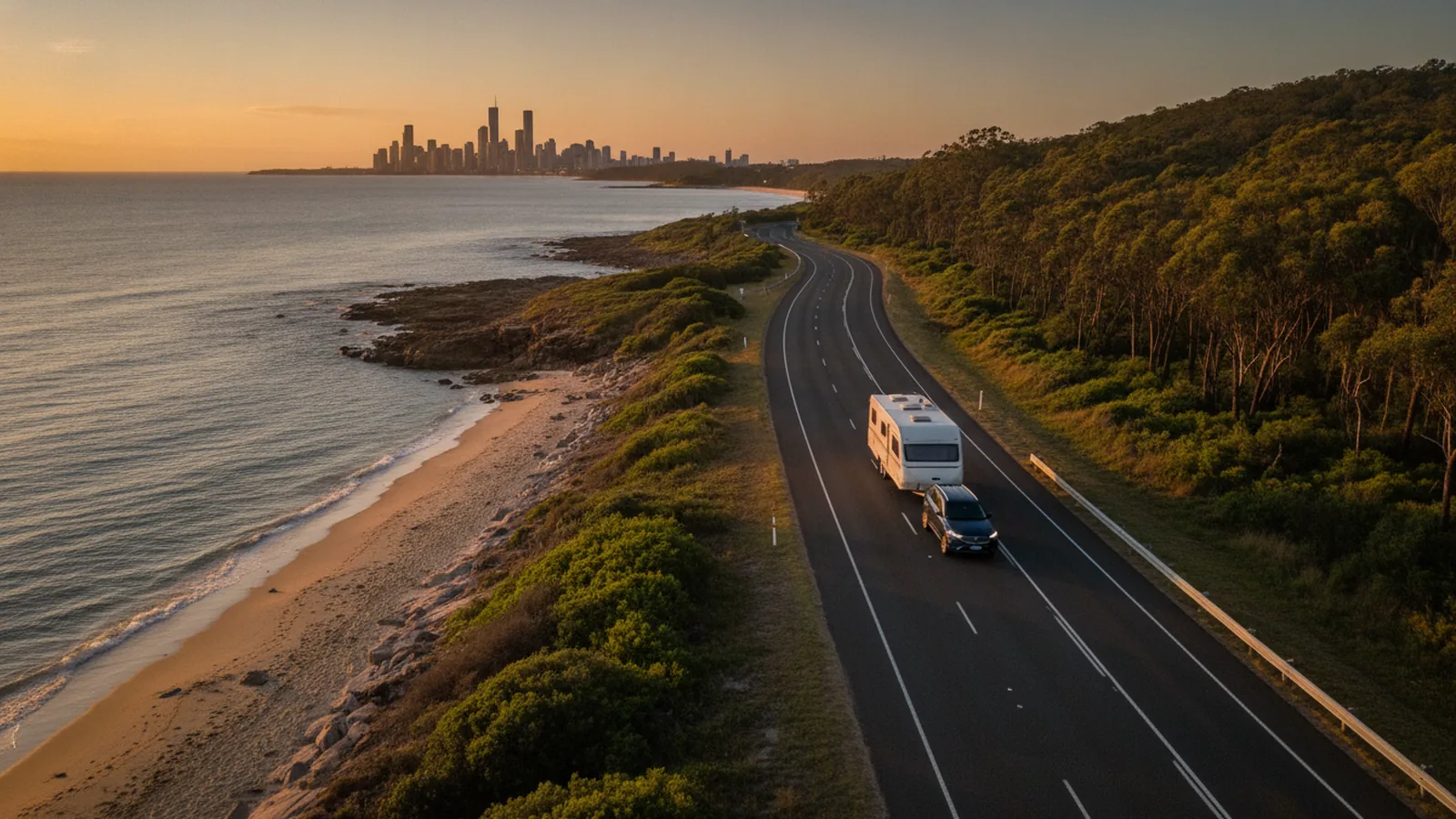
Queensland registers trailers and caravans but does not sell them CTP insurance, which leaves people asking the obvious question after a trailer swings into their lane or a caravan jackknifes on the highway: who is the insurer? The answer is in MAIC's guidance and in the Act, and it is simpler than the registration paperwork suggests.
Key points
- A trailer or caravan is covered for personal injury liability by the CTP insurance of the vehicle towing it.
- Trailers with a gross vehicle mass over 4.5 tonnes may need their own supplementary CTP policy (Class 24).
- A claim for injury caused by a towed trailer is made against the towing vehicle's CTP insurer in the ordinary way.
The towing vehicle's policy covers the trailer
MAIC's guidance for drivers is direct: your towing vehicle's CTP insurance covers the trailer for personal injury liability. A boat trailer, a box trailer, a horse float or a caravan attached to a car or ute is treated as part of that vehicle for CTP purposes, and injury caused by the driving of the combination is injury caused by the driving of the insured vehicle. The claim is made against the towing vehicle's CTP insurer, identified from the towing vehicle's registration, not the trailer's.
The heavy-trailer exception
Trailers with a gross vehicle mass over 4.5 tonnes, the larger commercial and agricultural trailers, may require a separate, supplementary CTP policy, which MAIC classes as Class 24. Where such a trailer is involved, both the prime mover's insurer and the trailer's supplementary insurer may be relevant, and identifying them is part of the notice process.
Trailers that come loose
A trailer that detaches and causes injury raises the question whether the injury was caused by the driving of the towing vehicle. Generally, injury caused by a trailer that has just become detached while being towed is treated as arising from the driving of the vehicle, and the towing vehicle's insurer responds. A trailer that has been parked and unattached for some time is a different case, and the claim may lie in negligence against whoever left it there. These situations turn on their facts and are worth early advice.
Caravans at rest
A caravan parked at a site is not being driven, and injury there, a fall from a step, a gas incident, is not a CTP matter. It may be a public liability claim against the caravan park, the caravan's owner, or a manufacturer, under the Personal Injuries Proceedings Act.
The claim itself
Once the insurer is identified, a trailer claim is an ordinary CTP claim: police report, Notice of Accident Claim within nine months or one month after seeing a lawyer, liability response within six months, rehabilitation, compulsory conference. Because trailer incidents often involve questions about loading, securing and towing capacity, the physical evidence at the scene, photographs of the hitch, the load and the vehicles, matters more than usual.
Frequently asked questions
Does a trailer need CTP insurance in Queensland? No. The towing vehicle's CTP insurance covers it, unless the trailer's gross vehicle mass is over 4.5 tonnes, in which case a supplementary policy may be required.
A caravan being towed hit my car and injured me. Who do I claim against? The CTP insurer of the vehicle towing the caravan, identified from that vehicle's registration.
Does CTP cover damage to my car from a trailer? No. CTP covers personal injury only. Vehicle damage is a separate claim against the towing vehicle's owner or their property insurer.
Sources
- Motor Accident Insurance Commission, Frequently asked questions (trailers and caravans covered by the towing vehicle's CTP; Class 24 supplementary policies) — maic.qld.gov.au
- Motor Accident Insurance Commission, Trailers and caravans — maic.qld.gov.au
- Motor Accident Insurance Commission, Vehicle classes — maic.qld.gov.au
- Motor Accident Insurance Act 1994 (Qld), ss 5, 37 — legislation.qld.gov.au