


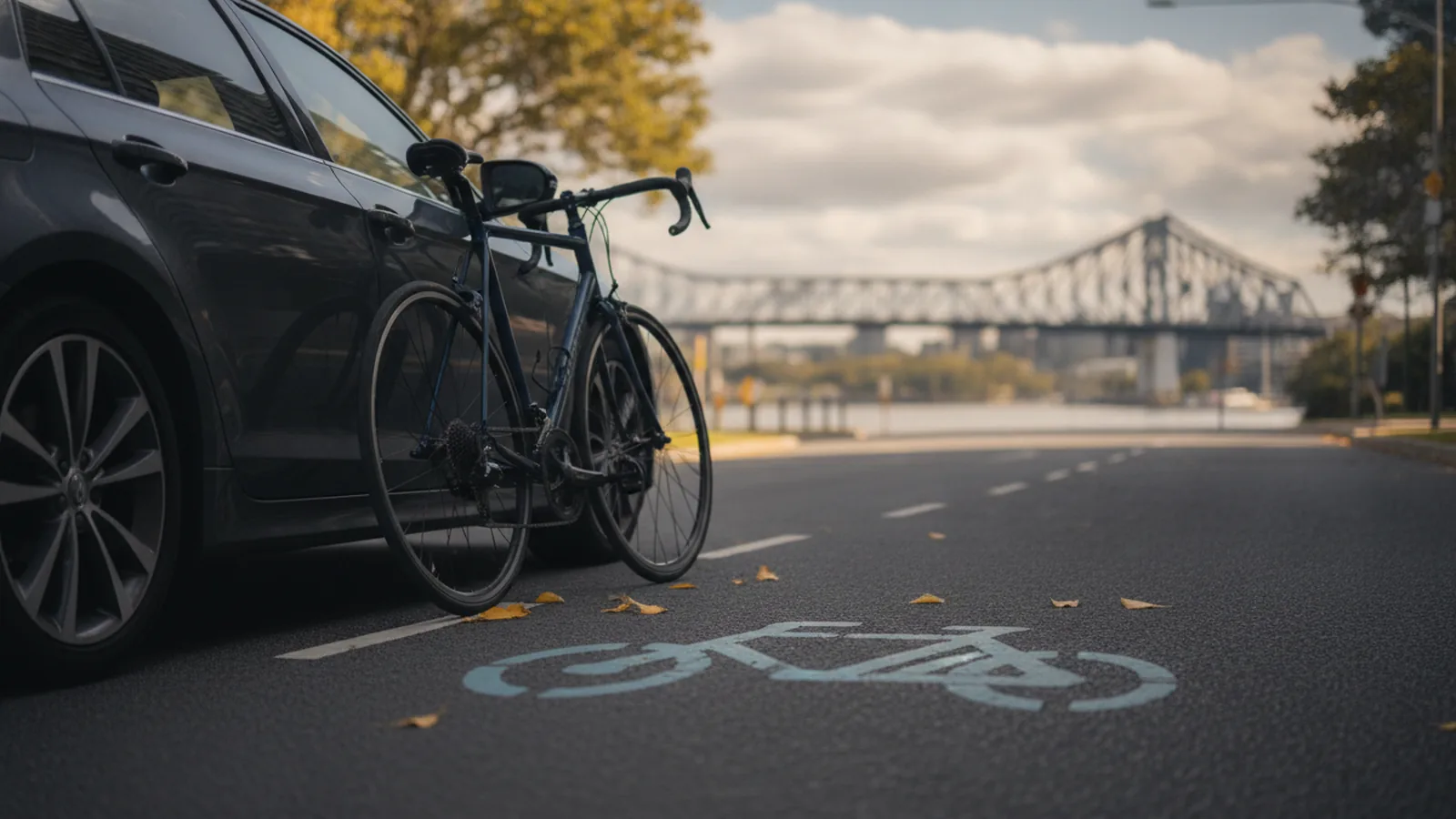
A cyclist is covered by the CTP scheme even though they pay nothing into it. The insurance sits on the motor vehicle, not on the person injured, so if a driver's negligence injures a rider, the rider claims against the driver's CTP insurer. What cyclists most often need explained is what counts as the driver's fault, what happens when the driver leaves, and how their own riding will be examined.
Key points
- A cyclist injured by a driver's negligence claims against the vehicle's CTP insurer; no cycling insurance is needed.
- Opening a car door into a cyclist's path is an offence under the Queensland Road Rules and a clear basis for a claim.
- If the driver leaves and cannot be identified, the claim goes to the Nominal Defendant, with a strict three-month lodgement window.
What drivers must do around cyclists
Queensland's road rules require drivers to keep at least one metre from a cyclist when passing at 60 km/h or less, and at least 1.5 metres above that. Drivers must not open a door in a way that endangers a person, which is the rule that governs "dooring" injuries. A car turning across a bike lane, merging into a rider, or pulling out of a driveway without looking is negligent in the ordinary way. A breach of the rules is strong evidence of negligence in a CTP claim, though a claim does not depend on a charge being laid.
Making the claim
The injured cyclist lodges a Notice of Accident Claim with the CTP insurer of the vehicle. The vehicle's registration is enough to identify the insurer through MAIC. The notice must be lodged within nine months of the accident, or within one month of first consulting a lawyer, whichever comes first. The accident should be reported to police, and it must be if anyone was injured and the driver did not stop.
Hit-and-run and unidentified vehicles
If the driver leaves and cannot be identified despite proper inquiry, the claim is made against the Nominal Defendant. The notice must be given within three months of the accident; after nine months the claim is barred outright. Police reports, CCTV from nearby businesses, and appeals for witnesses are the inquiries an insurer will expect to see. Do not wait to see whether the driver comes forward.
How your own riding is examined
The insurer will look at whether you were wearing a helmet, using lights at night, riding in a lawful position, and obeying signals. Failing to wear a helmet can reduce damages for head injury if the insurer proves the helmet would have prevented it; it does not reduce damages for a broken wrist. Contributory negligence reduces a claim by a percentage; it does not remove it.
What can be claimed
Treatment and rehabilitation, income loss past and future, superannuation, care from family or paid providers, replacement of the bicycle and equipment, and general damages for pain and loss of amenity under the injury scale. The insurer can fund rehabilitation while the claim runs. Catastrophic injuries are covered by NIISQ regardless of fault.
Frequently asked questions
Do I need bicycle insurance to claim after being hit by a car? No. The claim is against the driver's compulsory third party insurance, which every registered Queensland vehicle carries.
Can I claim if a driver opened their door into me? Yes. Opening a door into the path of a cyclist breaches the road rules and is a common basis for a CTP claim.
What if the driver drove off? Report it to police immediately and see a lawyer. A Nominal Defendant claim must be lodged within three months.
Sources
- Transport Operations (Road Use Management—Road Rules) Regulation 2009 (Qld), rr 144A (passing distance), 269 (opening doors) — legislation.qld.gov.au
- Motor Accident Insurance Act 1994 (Qld), ss 31, 33, 37 — legislation.qld.gov.au
- Civil Liability Act 2003 (Qld), ss 23–24 — legislation.qld.gov.au
- Motor Accident Insurance Commission, Nominal Defendant — maic.qld.gov.au
- Queensland Government, Sharing the road with cyclists: minimum passing distance — qld.gov.au